

Reading Terminal Market
Self-ReportedMixed Livestock Farm
Philadelphia, PA
Photos
About Reading Terminal Market
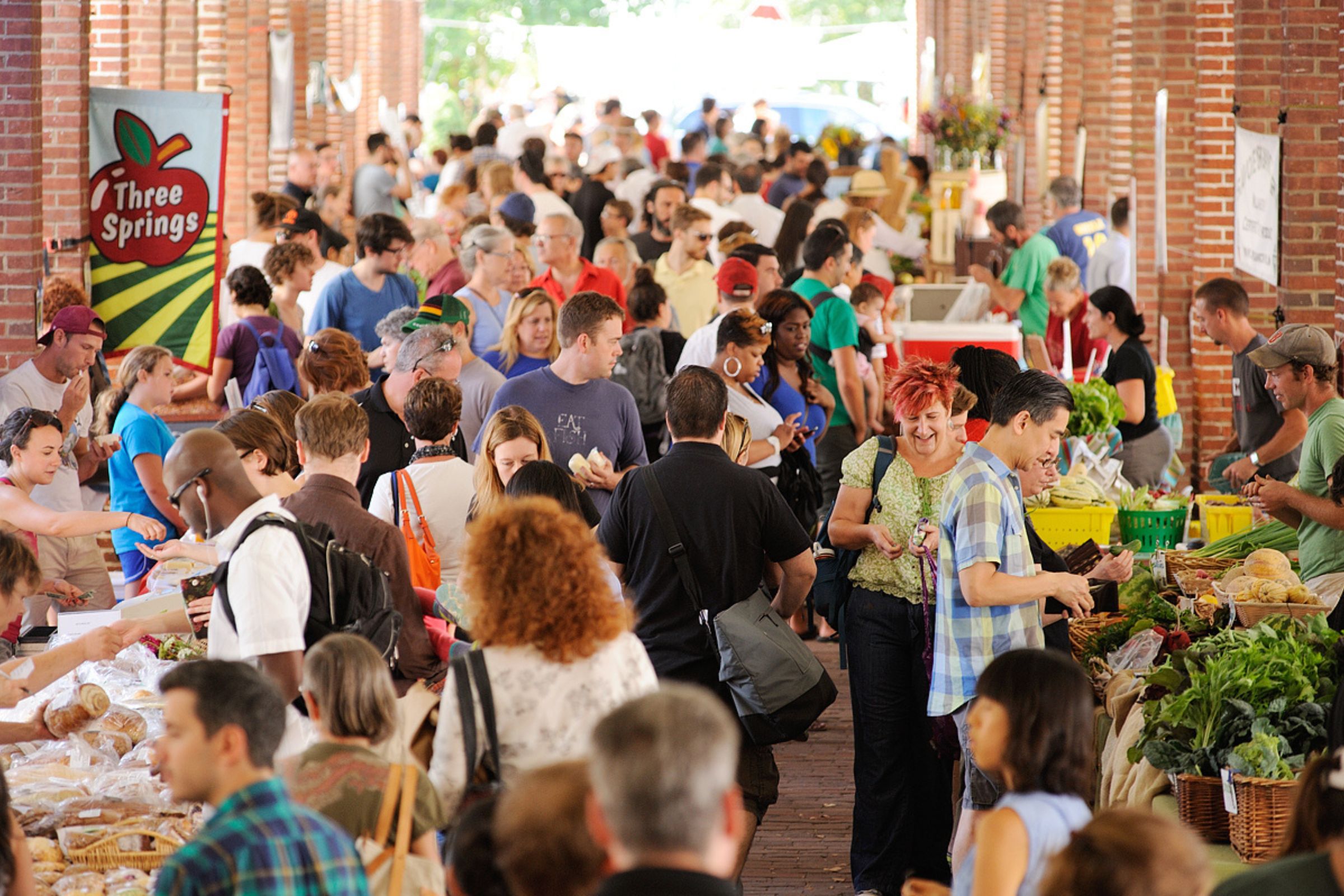
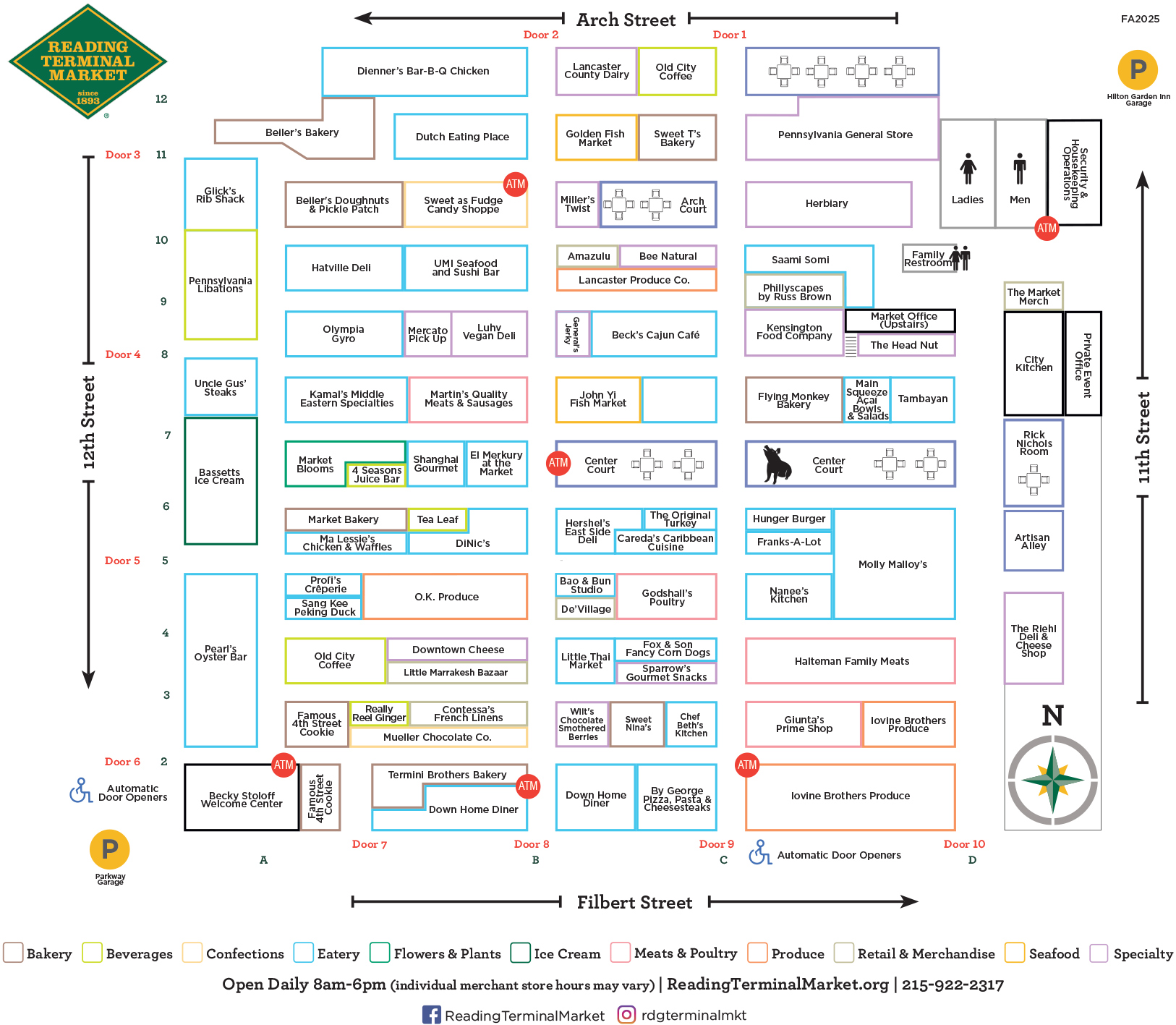
READING TERMINAL MARKET IS OPEN DAILY 8AM – 6PM Markets have been a part of Philadelphia’s history since the city’s development by William Penn in the late seventeenth century. When William Penn’s managers established the town of Philadelphia, one of their first actions was to herd the ragtag crowd of farmers, fisherman, and huntsman, who were hawking their goods all over the bustling settlement, into an open area at the foot of what was known as High Street, along the Delaware River. Soon the so-called ‘Jersey Market’ (because most of the hucksters were from the neighboring state) began to expand westward in the middle of the thoroughfare that had been appropriately renamed Market Street. With the growth of Philadelphia came the expansion of public markets. By the middle of the nineteenth century, the string of market sheds had become six blocks long, making the easternmost mile of the city’s main street a veritable babble of farmers and food purveyors on most Not long after, open air markets fell out of favor with the general public. They were considered health hazards and nuisances. They also created obstacles for the ever-increasing streetcar traffic. Bowing to complaints of nearby residents, city fathers decreed that the street markets would have to go, and in 1859 summarily dismantled them. It was then that two main markets sprang up at 12th and Market Streets. They were known as the Farmers’ Market and the Franklin Market. It would be these two markets that would become the forerunners of what is now Reading Terminal Market. Philadelphia’s original public market was located where High (later Market) Street intersected Front Street, close to the Delaware River. The city built its first market house in the middle of Second and High Streets. By 1809, city-owned market sheds, called shambles, lined the middle of High Street, extending west to Sixth Street. New markets opened in other parts of the city as the population grew. Today’s Reading Terminal Market had its roots in the Butchers’ and Farmers’ and Franklin Markets, both located on the 1100 block of Market Street. In 1890 the Philadelphia and Reading Railroad Company purchased this block for its new terminal. The merchants’ refusal to relocate for the new building resulted in an agreement to erect a new market tucked beneath the train shed and tracks. Reading Terminal Market Takes Shape The Reading Terminal Market opened for business on February 22, 1893. The street-level Market reverberated with the sound of trains rumbling overhead. The stalls were laid out in a grid pattern with twelve aisles running east-west and four wider avenues running north-south. Sawdust was spread on the floor to absorb spills and moisture rising from the vast cold storage facility in the basement. By 1913 the Market was booming, with 250 food dealers and 100 farmers occupying its stalls. The Market became known for its free delivery service. Boys called “Market brats” carried small orders to in-town customers. People living near train stations served by the Reading or Pennsylvania Railroads called in orders and had their goods dropped off near their homes. Some merchants had their own fleet of trucks. A parcel post department shipped products around the country and to Canada and Mexico. “The new market is much lighter than was anticipated, and as plenty of electric lamps have been provided, the market will be light on the darkest days.” Reading Terminal Market opened its doors in 1893. The new Market was approximately 78,000 square feet and held nearly 800 spaces for merchants, each positioned in six foot stalls. The Market was laid out in a grid system similar to the streets of Philadelphia. There were twelve aisles and four avenues. It was the perfect location for easily receiving and shipping goods. Soon after opening, the new state-of-the-art Reading Terminal Market would boast that its refrigeration facility was by far the biggest in Philadelphia with its half-million cubic f
Our Story
Public Markets in Philadelphia Markets have been a part of Philadelphia’s history since the city’s development by William Penn in the late seventeenth century. When William Penn’s managers established the town of Philadelphia, one of their first actions was to herd the ragtag crowd of farmers, fisherman, and huntsman, who were hawking their goods all over the bustling settlement, into an open area at the foot of what was known as High Street, along the Delaware River. Soon the so-called ‘Jersey Market’ (because most of the hucksters were from the neighboring state) began to expand westward in the middle of the thoroughfare that had been appropriately renamed Market Street. With the growth of Philadelphia came the expansion of public markets. By the middle of the nineteenth century, the string of market sheds had become six blocks long, making the easternmost mile of the city’s main street a veritable babble of farmers and food purveyors on most Not long after, open air markets fell out of favor with the general public. They were considered health hazards and nuisances. They also created obstacles for the ever-increasing streetcar traffic. Bowing to complaints of nearby residents, city fathers decreed that the street markets would have to go, and in 1859 summarily dismantled them. It was then that two main markets sprang up at 12th and Market Streets. They were known as the Farmers’ Market and the Franklin Market. It would be these two markets that would become the forerunners of what is now Reading Terminal Market. On and Off Market Street Philadelphia’s original public market was located where High (later Market) Street intersected Front Street, close to the Delaware River. The city built its first market house in the middle of Second and High Streets. By 1809, city-owned market sheds, called shambles, lined the middle of High Street, extending west to Sixth Street. New markets opened in other parts of the city as the population grew. Today’s Reading Terminal Market had its roots in the Butchers’ and Farmers’ and Franklin Markets, both located on the 1100 block of Market Street. In 1890 the Philadelphia and Reading Railroad Company purchased this block for its new terminal. The merchants’ refusal to relocate for the new building resulted in an agreement to erect a new market tucked beneath the train shed and tracks. Reading Terminal Market Takes Shape The Reading Terminal Market opened for business on February 22, 1893. The street-level Market reverberated with the sound of trains rumbling overhead. The stalls were laid out in a grid pattern with twelve aisles running east-west and four wider avenues running north-south. Sawdust was spread on the floor to absorb spills and moisture rising from the vast cold storage facility in the basement. By 1913 the Market was booming, with 250 food dealers and 100 farmers occupying its stalls. The Market became known for its free delivery service. Boys called “Market brats” carried small orders to in-town customers. People living near train stations served by the Reading or Pennsylvania Railroads called in orders and had their goods dropped off near their homes. Some merchants had their own fleet of trucks. A parcel post department shipped products around the country and to Canada and Mexico. “The new market is much lighter than was anticipated, and as plenty of electric lamps have been provided, the market will be light on the darkest days.” Reading Terminal Market opened its doors in 1893. The new Market was approximately 78,000 square feet and held nearly 800 spaces for merchants, each positioned in six foot stalls. The Market was laid out in a grid system similar to the streets of Philadelphia. There were twelve aisles and four avenues. It was the perfect location for easily receiving and shipping goods. Soon after opening, the new state-of-the-art Reading Terminal Market would boast that its refrigeration facility was by far the biggest in Philadelphia with its half-millio
Meet Francesco Accardo
Store Owner · Since 1893
What Sets This Farm Apart
Self-ReportedEvery practice listed here means something specific. Tap any practice to learn what it requires and why it matters.
Dairy
Poultry & Eggs
Self-reported practices. This farm has provided information about their practices, but they have not yet been independently verified by Bhumi.
Hours & Operations
Location & Directions
Quick Facts
Practices